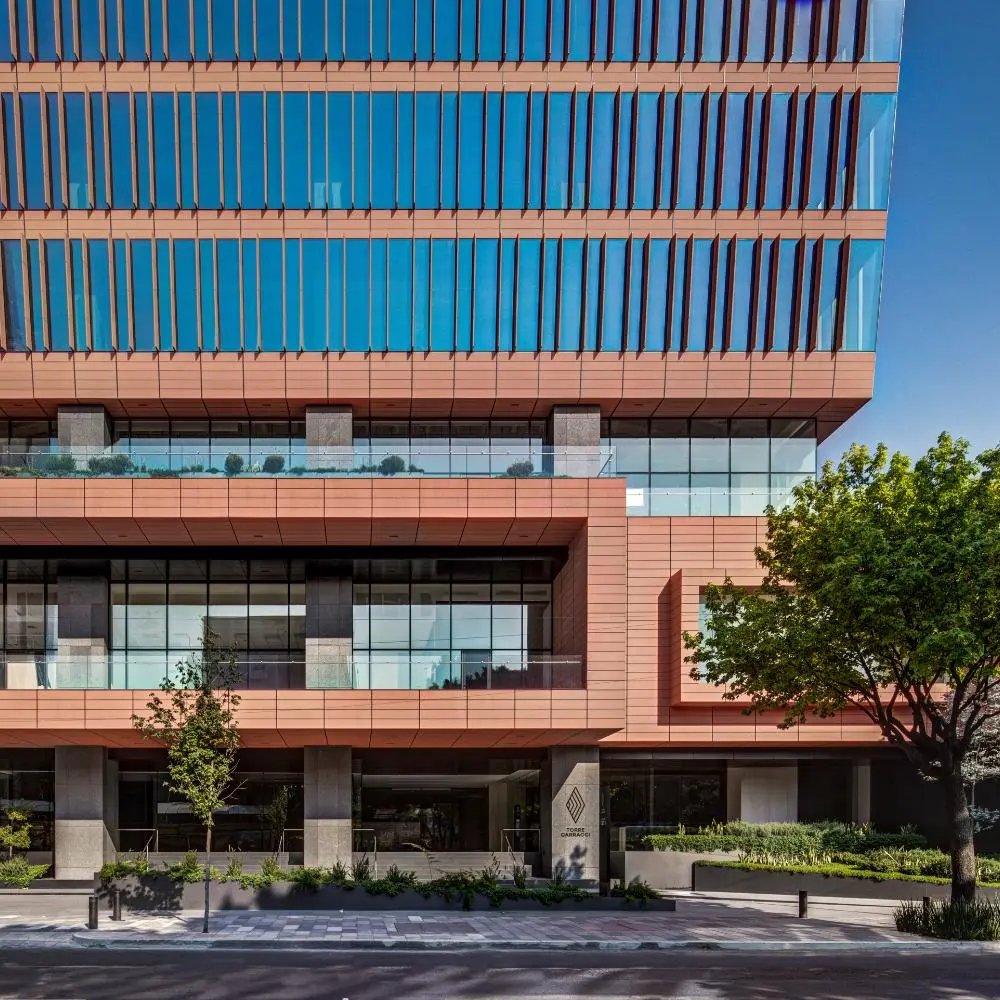
Aluminum Panel Curtain Wall
Product Overview
Aluminum panel curtain walls are currently one of the most mainstream metal enclosure systems for commercial building facades. They use aluminum single panels, aluminum honeycomb panels, and aluminum composite panels as the finish layer, which are fixed to the main structural framework via a subframe system, combining aesthetic appeal with practical functionality. With characteristics such as lightweight construction, high formability, excellent corrosion resistance, and efficient installation, they are widely suited to meet the facade decoration needs of various public and commercial buildings, effectively enhancing both the visual quality and durability of the structure.
Technical Principles and Structural Composition
The core structure of an aluminum panel curtain wall consists of four main components: the aluminum panel surface layer, reinforcing ribs, aluminum subframes, and the hanging system. These elements work in concert to provide stable enclosure performance. The load-bearing path is clear and well-defined: after the aluminum panel surface layer bears external loads, it transfers the force to the reinforcing ribs; the ribs further distribute the load to the aluminum subframes; finally, the subframes transmit the load to the building’s main structural framework, forming a complete load-bearing loop that ensures structural stability under various operating conditions.
Key Performance Advantages
1. Exceptional Lightweight Design: Aluminum panel curtain walls offer a significant weight advantage. Taking a 3mm aluminum panel as an example, its weight is only about 8.1 kg per square meter, whereas traditional stone curtain walls weigh approximately 60 kg per square meter—representing a weight reduction of over 80%. This lightweight design substantially reduces the load on the building’s main structure, lowers foundation construction costs and complexity, and decreases labor and material consumption during transportation and installation.
2. Superior Formability: Aluminum possesses outstanding processing properties, allowing it to be fabricated into complex shapes such as hyperbolic surfaces, spherical forms, and irregular panels, perfectly aligning with diverse architectural designs and providing architects with ample creative freedom to craft distinctive, artistic facades.
3. Excellent Corrosion Resistance: Aluminum panels treated with PVDF fluorocarbon coating boast weather resistance lasting more than 20 years, effectively resisting erosion from acid rain, ultraviolet radiation, windblown sand, and other harsh environmental factors. Even after prolonged use, the facade maintains vibrant coloration, significantly reducing maintenance costs and extending service life.
4. High-Efficiency Installation: Aluminum panel curtain walls employ a modular production approach with an extremely high degree of factory prefabrication, requiring only on-site assembly and fixation. This dramatically shortens the construction period, minimizes the impact of on-site work on the surrounding environment, and is particularly suitable for large-scale commercial projects with tight schedules.
Core Product Value
1. Lightweight design reduces the building’s load, cuts foundation construction costs and simplifies installation, thereby enhancing structural safety.
2. Strong formability meets diverse architectural design requirements, helping create unique façades and boosting brand recognition.
3. Weather resistance exceeding 20 years ensures long-term aesthetic stability, greatly lowering subsequent maintenance expenses.
4. Modular, efficient installation shortens project timelines, accelerates building commissioning, and improves return on investment.
Target Customer Groups
The target customer base for aluminum panel curtain walls encompasses enterprises and institutions across the entire industry chain, including architectural curtain wall engineering firms, curtain wall design companies, curtain wall contractors, general contractors specializing in curtain walls, general construction contractors, EPC engineering firms, state-owned construction groups, overseas project general contractors, commercial complex developers, residential developers, industrial park developers, hotel investment groups, architectural design institutes, curtain wall consulting firms, and architectural practices—meeting the needs of each stage of the project lifecycle.
Typical Application Scenarios
Thanks to their superior performance and aesthetic appeal, aluminum panel curtain walls are widely used in various large-scale public and commercial settings, primarily including commercial complexes, subway stations, high-speed rail stations, hospitals, schools, and sports arenas. In commercial complexes, these curtain walls can create modern, stylish exteriors that attract foot traffic; at transportation hubs like subway and high-speed rail stations, their lightweight nature and easy-clean qualities facilitate routine maintenance; while in public facilities such as hospitals, schools, and sports venues, their corrosion resistance and long service life ensure reliable, long-term operation.
Solutions to Industry Pain Points
In the curtain wall industry, traditional systems often face numerous challenges, which aluminum panel curtain walls address effectively:
1. Panel Deformation: Traditional curtain walls are prone to panel deformation due to structural design flaws. Aluminum panel curtain walls mitigate this issue by strategically configuring reinforcing ribs and optimizing load transfer pathways, ensuring smooth, flat façades.
2. Color Variation: Some curtain walls exhibit noticeable color differences caused by variations in material batches, impacting overall aesthetics. Aluminum panel curtain walls utilize standardized factory prefabrication, rigorously controlling paint application processes and material batch consistency to minimize color variation.
3. Paint Peeling: Low-quality coatings can lead to paint flaking. Aluminum panel curtain walls employ high-quality PVDF fluorocarbon coating technology, offering strong adhesion and excellent weather resistance, effectively preventing paint peeling and maintaining long-term facade quality.
Frequently Asked Questions (FAQ)
Q1: What are the key advantages of aluminum panel curtain walls compared to stone curtain walls?
A: The most significant advantage of aluminum panel curtain walls is their lightweight nature—3mm aluminum panels weigh only about 8.1 kg per square meter, more than 80% lighter than stone. They also offer greater formability, enabling fabrication into a variety of custom shapes, boast weather resistance exceeding 20 years, and deliver higher installation efficiency.
Q2: How durable is the weather resistance of aluminum panel curtain walls?
A: Aluminum panel curtain walls coated with PVDF fluorocarbon can withstand weathering for over 20 years, effectively resisting acid rain, UV radiation, and other environmental factors, while maintaining stable coloration over time.
Q3: Which types of buildings are best suited for aluminum panel curtain walls?
A: Aluminum panel curtain walls are ideal for commercial complexes, subway stations, high-speed rail stations, hospitals, schools, sports arenas, and other public and commercial structures—especially projects requiring distinctive façade designs, lightweight structures, or efficient construction methods.
Q4: How can color variation issues be prevented in aluminum panel curtain walls?
A: By utilizing standardized factory prefabrication, strictly controlling material batches and paint application processes to ensure consistent color within each batch, and conducting pre-installation layout checks to confirm uniformity, color variation can be effectively avoided.