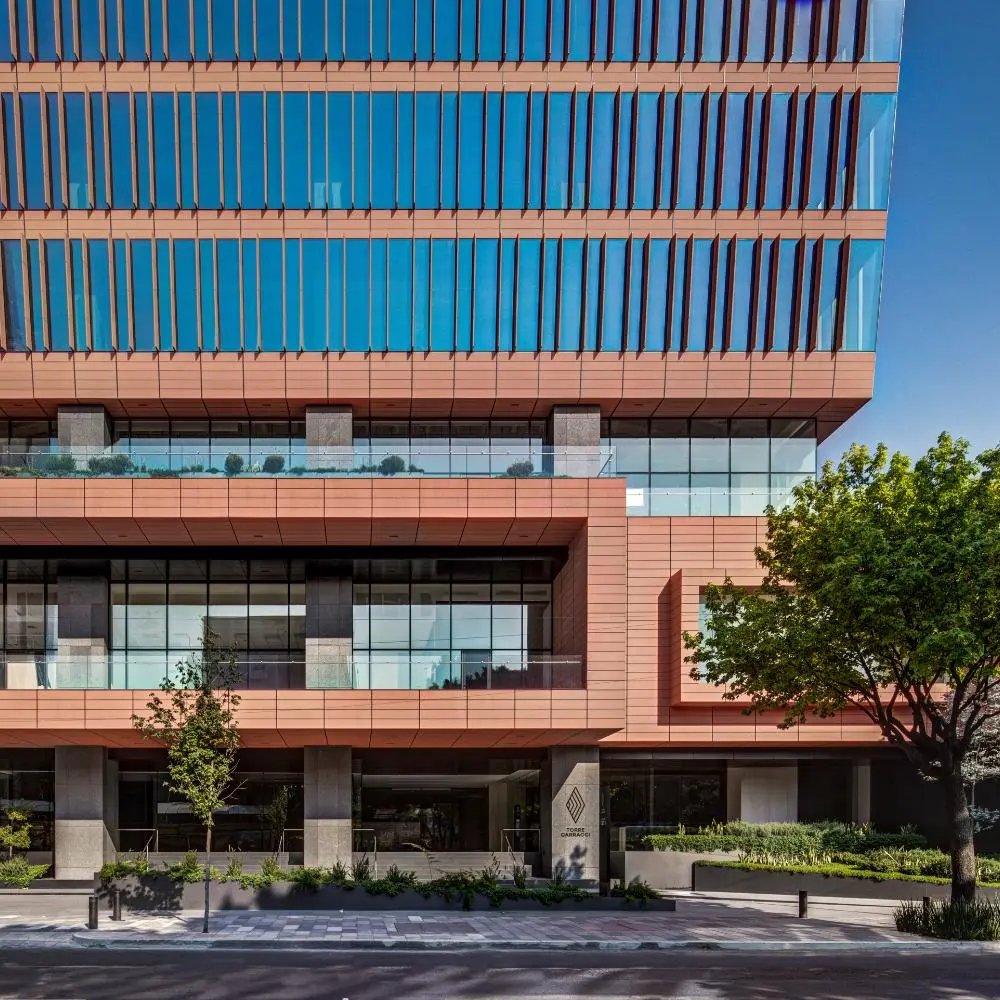
Metal Curtain Wall
Product Overview
Metal curtain walls are specialized exterior façade systems composed of various metal materials, including aluminum-magnesium-manganese panels, stainless steel panels, copper panels, and titanium-zinc panels. They represent a high-end façade solution for architecture. This system employs a hierarchical installation method—metal panel → secondary keel → main keel → primary structure—to achieve a secure connection with the building’s core structure. With superior performance and distinctive aesthetic appeal, it has become the preferred façade decoration choice for landmark projects and high-end commercial buildings, widely used in large-scale construction projects worldwide.
Core Performance Advantages
1. Outstanding Weather Resistance and Adaptability to Extreme Environments: The metal materials used in curtain walls exhibit excellent weather resistance, enabling them to withstand high temperatures, low temperatures, high humidity, intense ultraviolet radiation, salt spray corrosion, and other extreme natural conditions. They remain resistant to fading, deformation, and corrosion over long-term use, ensuring the integrity and aesthetic appeal of the building façade while extending the maintenance cycle.
2. Exceptional Malleability and Capability for Complex Curved Forms: Metal sheets possess excellent ductility and malleability; combined with advanced fabrication techniques, they can be custom-formed into intricate curved surfaces and irregular structures, perfectly meeting the unique design requirements of landmark buildings and super-tall structures, helping architects create visually striking architectural exteriors.
3. High-End Quality and Suitability for Landmark Projects: As a premium façade solution, metal curtain walls offer a texture and visual impact far surpassing ordinary curtain walls, enhancing the overall quality and recognizability of a building. Consequently, they are extensively applied in landmark projects such as airports, museums, sports venues, and super-tall buildings, serving as a key element that underscores a building’s high-end positioning.
Installation Structural System
Metal curtain walls utilize a tiered installation structure, progressing from the exterior inward: metal panel, secondary keel, main keel, and finally the primary structural framework. The metal panel serves as both the decorative and functional layer of the façade, directly shaping the building’s exterior appearance. The secondary keel supports the metal panel and distributes loads, ensuring smooth and stable installation. The main keel acts as the core load-bearing component, transferring the entire curtain wall system’s load to the building’s primary structure, thereby guaranteeing overall safety. Ultimately, through a robust connection with the building’s main structure, the curtain wall achieves stable installation, ensuring long-term safety and reliability.
Target Customer Groups
The primary customer base for metal curtain walls includes architectural curtain wall engineering firms, curtain wall design companies, curtain wall contractors, curtain wall general contractors, building general contractors, EPC engineering firms, state-owned construction groups, and overseas project general contractors—essentially, all types of engineering service providers. It also encompasses commercial complex developers, residential developers, industrial park developers, hotel investment groups, and other real estate development enterprises. Additionally, it provides professional façade solutions to architectural design institutes, curtain wall consulting firms, and architectural practices.
Key Application Scenarios
1. Airports: As major transportation hubs, airport buildings demand exceptional visual recognition and durability. The strong weather resistance and distinctive appearance of metal curtain walls align with the high-end positioning of airports while accommodating heavy foot traffic and complex environmental conditions.
2. Museums: As cultural landmarks, museums require both aesthetic appeal and functionality. The malleability of metal curtain walls enables unique architectural forms, while their weather resistance ensures consistent appearance during extended exhibitions, adding a distinctive artistic flair to cultural buildings.
3. Sports Venues: Sports venues typically feature vast spans and distinctive shapes. The ability of metal curtain walls to accommodate complex curved forms perfectly matches venue design needs, while their robust weather resistance supports long-term outdoor use, maintaining the venue’s enduring aesthetic appeal.
4. Landmark Buildings: As symbols of a city’s identity, landmark buildings benefit greatly from the high-end texture and unique styling of metal curtain walls, creating highly recognizable exteriors that become iconic urban landscapes.
5. Super-Tall Buildings: Facing extreme environmental challenges such as strong winds and temperature fluctuations, the adaptability of metal curtain walls to harsh conditions and their solid installation structure ensure the safety and stability of the building façade. Meanwhile, their distinctive appearance enhances the overall quality of super-tall structures.
Addressing Industry Pain Points and Providing Solutions
Although metal curtain walls offer numerous advantages, they also face certain industry-wide challenges. Professional curtain wall service teams can provide tailored solutions to address these issues:
1. High Initial Investment and Material Costs: The material costs of metal curtain walls exceed those of conventional curtain walls, resulting in a substantial upfront investment. To mitigate this, optimizing material selection and design schemes can help control costs while maintaining quality, leveraging the long service life and low maintenance expenses to deliver lasting cost-effectiveness.
2. Demanding Professionalism and Precision in Construction and Installation: Installing metal curtain walls requires highly skilled teams and meticulous attention to detail. By partnering with experienced curtain wall contractors and employing standardized construction processes along with precise measurement and installation techniques, smooth and stable installation can be ensured, preventing future issues like deformation or water leakage.
3. Thermal Expansion and Contraction, Alongside Complex Joint Design: Metal materials exhibit significant thermal expansion and contraction, making joint design relatively complex. Employing flexible connection joints and optimizing material expansion allowances can effectively alleviate structural stress caused by thermal changes, ensuring long-term stability. Additionally, professional waterproofing designs at joints prevent potential leaks arising from joint-related problems.
Frequently Asked Questions (FAQ)
Q1: What are the core advantages of metal curtain walls compared to conventional ones?
A: Metal curtain walls utilize high-end metal materials, offering exceptional weather resistance, adaptability to extreme environments, and outstanding malleability, enabling complex curved forms. They are the preferred façade solution for high-end architecture, delivering superior visual texture and durability compared to ordinary curtain walls, and are widely employed in various landmark projects.
Q2: What are the main application scenarios for metal curtain walls?
A: Metal curtain walls are primarily used in high-end architectural projects such as airports, museums, sports venues, landmark buildings, and super-tall structures, meeting these projects’ core demands for aesthetic form, durability, and quality positioning.
Q3: What is the installation structure of metal curtain walls?
A: Metal curtain walls adopt a tiered installation structure, progressing from the exterior inward: metal panel → secondary keel → main keel → primary structure. This robust hierarchical arrangement ensures a firm connection between the curtain wall system and the building’s core structure, safeguarding safety and stability during use.
Q4: Are maintenance costs for metal curtain walls high?
A: Thanks to their strong weather resistance, metal curtain walls are less prone to corrosion and fading, resulting in lower long-term maintenance costs. Although the initial investment may be higher, their exceptionally long service life makes them highly cost-effective overall.