Metal curtain walls are constructed from metal materials such as aluminum‑magnesium‑manganese panels and stainless steel sheets, offering a high‑end façade solution that is widely employed in landmark projects and boasts exceptional weather resistance and the ability to accommodate complex architectural forms.
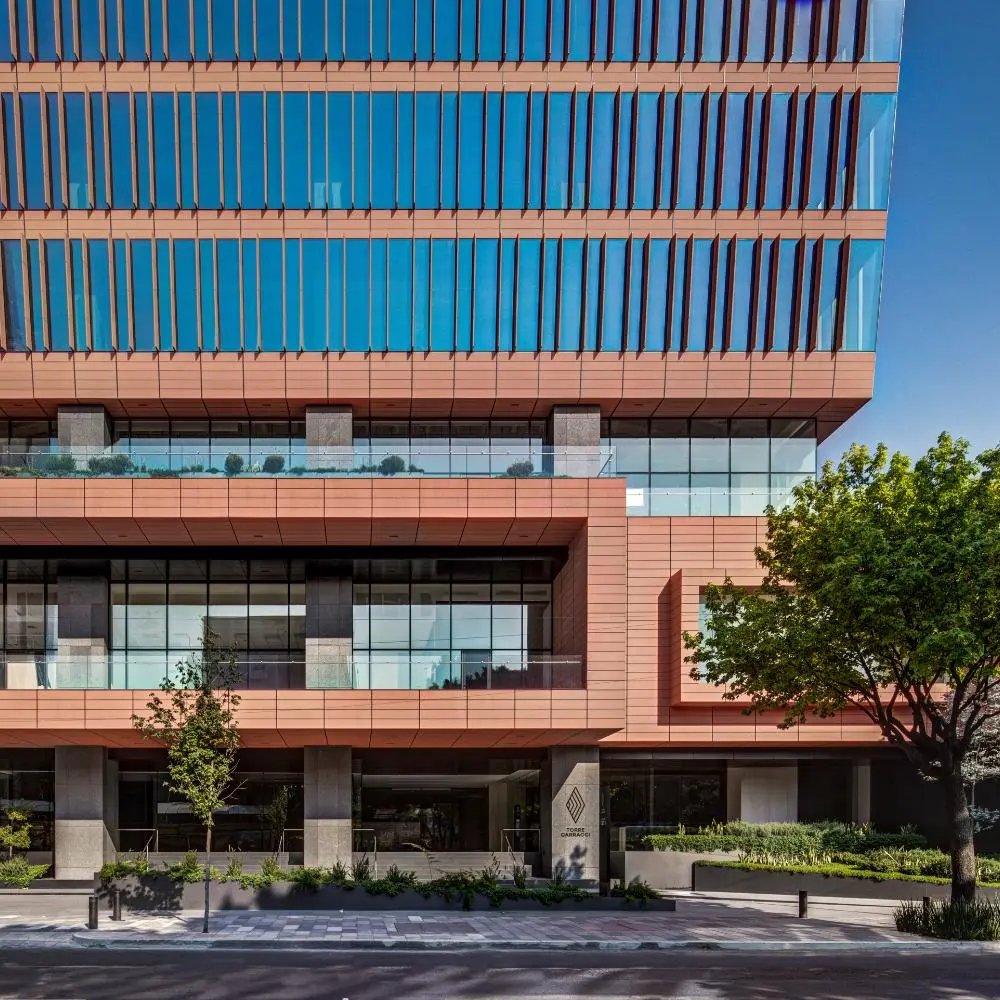
The terracotta brick curtain wall is anchored to the building’s exterior using stainless steel hangers and a supporting framework, offering a traditional architectural texture and European aesthetic while delivering energy efficiency, thermal insulation, exceptional weather resistance, and UV‑protective properties.
Terracotta panel curtain walls are manufactured by sintering natural clay at temperatures exceeding 1,100°C, making them an environmentally friendly building material. They feature zero VOC emissions, long-lasting color retention, and self-cleaning properties, and are widely used throughout Europe.
Stone curtain walls use natural granite and marble as the cladding, secured to the building structure via a dry‑hanging system. They offer a high‑end, luxurious aesthetic, natural veining, an exceptionally long service life of over 50 years, and excellent resistance to UV radiation and aging.
Aluminum panel curtain walls use aluminum composite panels, aluminum honeycomb panels, and other materials as the finish layer, which are secured by a subframe system. They are the mainstream metal enclosure system for commercial building facades, offering lightweight construction and excellent weather resistance.
Glass curtain walls are building envelope systems that use suspended glass as the core panel, supported by aluminum profiles, steel structures, and other supporting frameworks. They offer transparency, aesthetic appeal, energy efficiency, and excellent daylighting, making them widely used in various large-scale buildings.