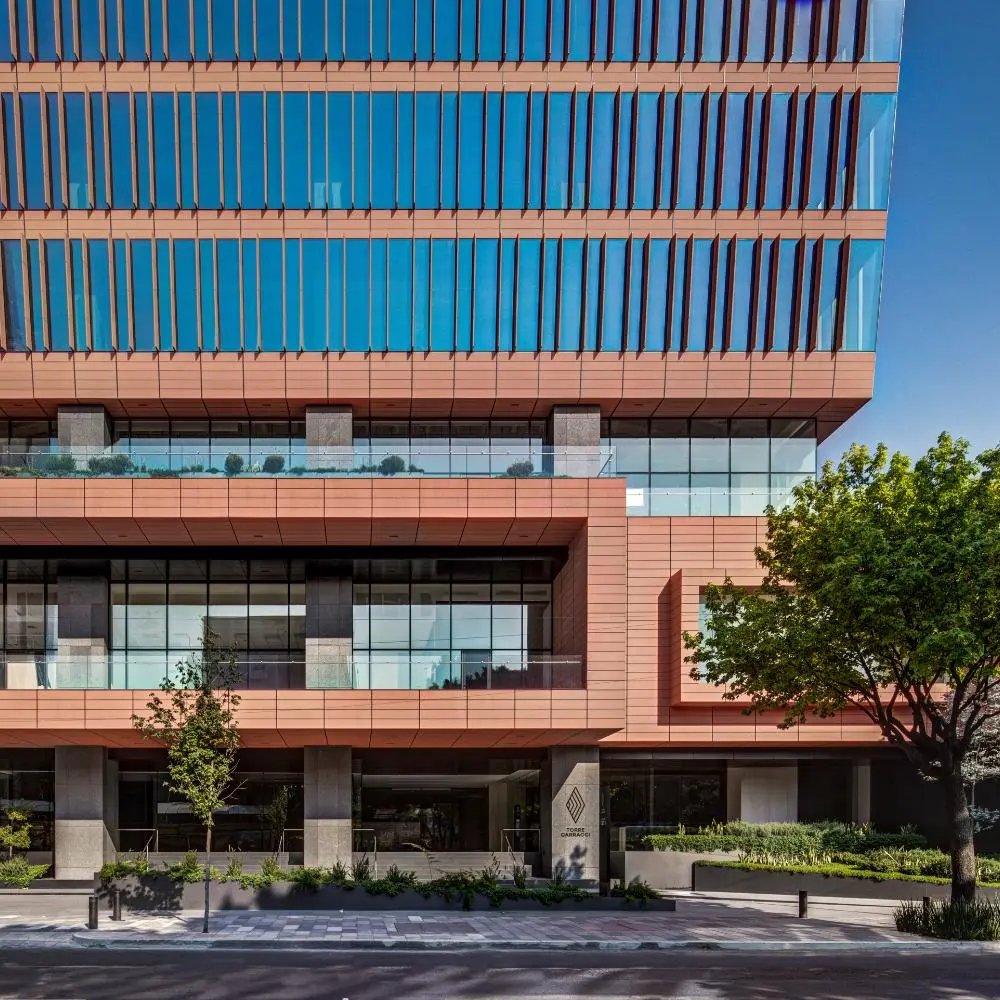
Stone Curtain Wall
Product Overview
Stone curtain walls use natural granite, marble, and other stone materials as cladding, fixed to the exterior of the building’s main structure via a specialized dry-hanging system. The dry-hanging structure consists of stone panels, back bolts, stainless steel hangers, and steel mullions, with a clear and well-defined load-transfer path: the stone panel transfers its load sequentially through the back bolts, hangers, and mullions, ultimately reaching the building’s structural framework, ensuring overall stability. With the unique texture of natural stone, this type of curtain wall delivers a high-end, luxurious visual effect; its natural patterns are irreplaceable, giving each building a distinctive aesthetic identity. Additionally, it boasts an exceptionally long service life of over 50 years, excellent resistance to UV radiation and aging, and outstanding durability, making it an ideal choice for high-end architectural facades.
Structural Composition and Load-Transfer System
The dry-hanging system of a stone curtain wall comprises several key components, each playing a critical structural role: first, the stone panels themselves, made from natural granite or marble, serve as both the facade’s aesthetic element and the primary load-bearing substrate; second, the back bolts, which connect the stone panels to the hangers, directly bear the weight of the panels and thus have extremely stringent quality requirements; third, the stainless steel hangers link the back bolts to the steel mullions, offering superior corrosion resistance to ensure long-term connection stability; finally, the steel mullions act as the structural link between the curtain wall and the building’s main frame, transferring the entire load of the curtain wall to the building’s core structure.
Its load-transfer system follows a clear pathway: the self-weight of the stone panels and external loads are first transferred to the back bolts, which then pass the load to the stainless steel hangers; these hangers further transmit the load to the steel mullions, and ultimately, the mullions convey all loads to the building’s structural framework. This tightly integrated system ensures structural safety throughout the curtain wall’s long-term service life.
Core Advantages
1. High-End Luxurious Appearance: Using natural granite and marble as cladding, the rich, refined texture of natural stone creates a sophisticated, grand architectural facade, elevating the overall grade of the building and aligning perfectly with the positioning needs of upscale commercial, office, and residential projects.
2. Unique Natural Patterns: Each piece of natural stone features an unmistakable, one-of-a-kind pattern, lending the facade a distinctive identity and avoiding cookie-cutter designs, thereby highlighting the building’s individuality and premium quality.
3. Exceptional Longevity: With a service life exceeding 50 years and remarkable durability, stone curtain walls require far less frequent replacement or maintenance compared to conventional materials, significantly reducing long-term facade upkeep costs.
4. Superior Anti-Aging Performance: Featuring outstanding resistance to UV radiation and aging, even after prolonged exposure to harsh outdoor conditions, the facade maintains stable coloration and reliable structural integrity, without easily suffering from fading or deformation.
Target Customer Base
The target customers for stone curtain walls span multiple stakeholders across the construction industry chain, including curtain wall engineering firms, curtain wall design companies, installation contractors, general contractors specializing in curtain walls, general contractors, EPC firms, state-owned construction groups, overseas project general contractors, and other project implementation entities. They also include developers of commercial complexes, residential projects, industrial parks, hotel investment groups, as well as architectural design institutes, curtain wall consulting firms, and architectural practices—each of these entities represents a core demand source for stone curtain walls.
Application Scenarios
With their high-end appearance and exceptional durability, stone curtain walls are primarily used in various luxury architectural projects, such as star-rated hotels, where they help create a lavish, imposing exterior that leaves a lasting impression on guests; government office buildings, emphasizing a dignified, formal architectural character and reinforcing the image of governmental institutions; bank headquarters, projecting a solid, trustworthy brand image and boosting customer confidence; and luxury residential developments, imparting unique texture and quality to high-end homes and meeting the exacting standards of discerning homeowners.
Industry Pain Points and Solutions
Although stone curtain walls offer numerous advantages, they do face certain common industry challenges. However, these can be effectively addressed through professional design and construction: First is the issue of substantial self-weight, which increases structural costs. To mitigate this, engineers can optimize the steel mullion design by selecting high-strength, lightweight materials, thereby minimizing overall load while maintaining structural safety and reducing cost burdens. Second is the problem of slow installation and heavy reliance on manual labor. This can be improved by standardizing prefabricated components and introducing specialized installation equipment, enhancing efficiency and decreasing dependence on manual labor. Lastly, there’s the risk of detachment and the need for high-quality back bolts. To address these concerns, strict quality control must be applied during procurement of key components like back bolts, choosing products that meet national standards, while adhering rigorously to standardized installation procedures and conducting regular maintenance inspections to minimize detachment risks and ensure safe, long-term use.
Frequently Asked Questions (FAQ)
Q1: How long is the service life of a stone curtain wall?
A: Stone curtain walls boast an exceptionally long service life of over 50 years, characterized by remarkable durability, excellent resistance to UV radiation and aging, and the ability to maintain stable aesthetics and structural performance over time.
Q2: What are the main structural components of a stone curtain wall?
A: The dry-hanging system of a stone curtain wall mainly consists of stone panels, back bolts, stainless steel hangers, and steel mullions, with a load-transfer path proceeding from the stone panel → back bolt → hanger → mullion → structural framework.
Q3: In which types of building projects is a stone curtain wall suitable?
A: Stone curtain walls are ideally suited for high-end settings such as star-rated hotels, government office buildings, bank headquarters, and luxury residential developments, creating a sophisticated, luxurious architectural appearance that aligns perfectly with the positioning needs of these projects.
Q4: How can the issue of significant self-weight be managed?
A: By optimizing the steel mullion design and selecting high-strength, lightweight materials, it’s possible to reduce overall load while ensuring structural safety, thereby mitigating the increase in building structural costs.