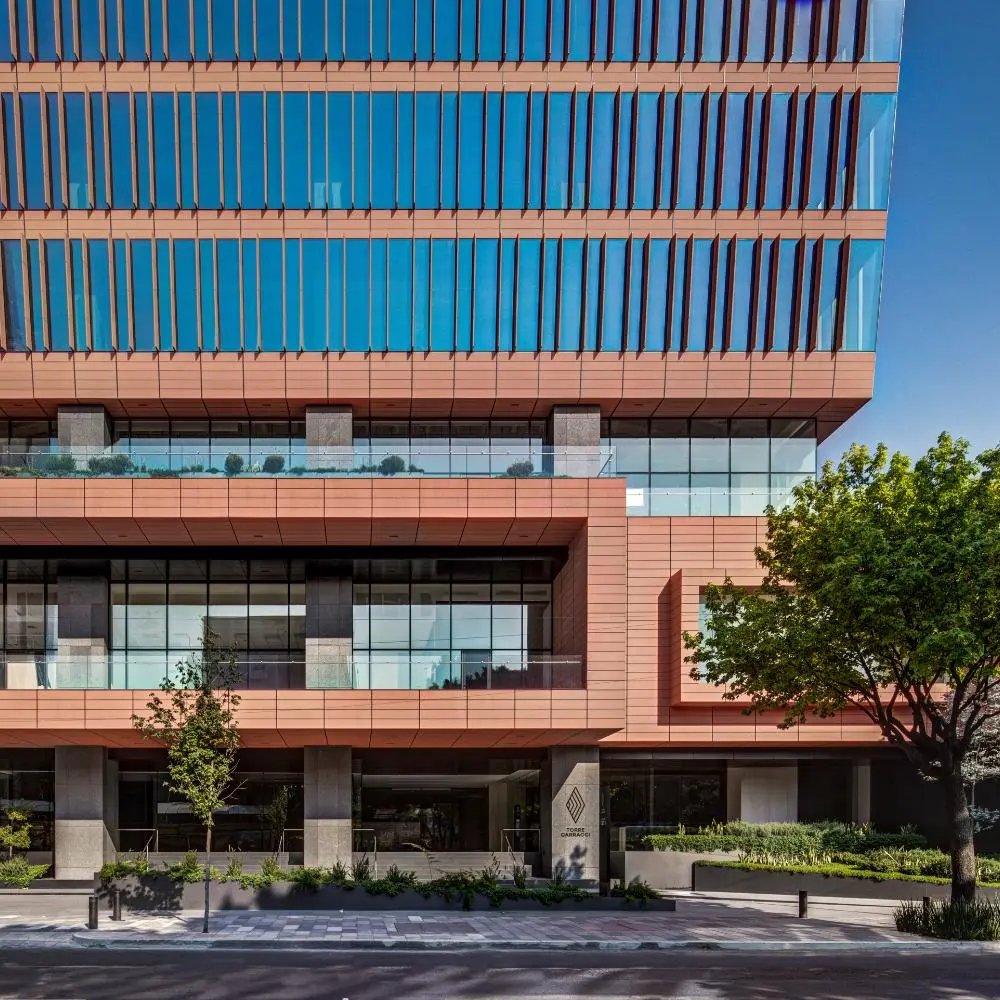
Unitized Curtain Wall
Product Overview
The unitized glass curtain wall system is an assembled exterior wall solution specifically designed for modern architecture. Unlike traditional on-site cast-in-place curtain wall construction, each complete curtain wall unit is prefabricated in a factory setting and simply transported to the construction site for splicing and assembly, thus completing the exterior wall installation. Each fully assembled curtain wall unit integrates a complete set of functional components, including aluminum alloy frames, optional insulated glass/laminated glass/low-emissivity Low-E glass panels, sealing systems, and thermal insulation structures. This eliminates the need for on-site assembly and processing of individual components, realizing an industrialized, standardized curtain wall construction process.
Core Philosophy
The core philosophy of the unitized curtain wall is “precision prefabrication in the factory + rapid on-site assembly.” This approach breaks the limitations of traditional curtain wall construction by shifting most of the construction processes to the factory workshop. Relying on the factory’s standardized production equipment and rigorous quality control system, it ensures the machining accuracy and performance stability of each curtain wall unit. Subsequently, through a fast on-site assembly process, it significantly shortens the construction period of the building’s exterior walls while enhancing overall construction quality and safety.
Installation Process
The installation of the unitized curtain wall follows a strict standardized procedure to ensure construction quality and structural safety:
1. Embedded parts and anchorages: First, precision-installed embedded steel plates and anchor bolts are fixed to the main structure of the building. During construction, positioning accuracy is strictly controlled, and professional layout operations ensure that all embedded parts are aligned, laying a solid foundation for the subsequent installation of curtain wall units.
2. Support bracket installation: Load-bearing brackets are secured to the embedded parts of the building’s main structure. After installation, the verticality and elevation of the brackets must be carefully calibrated to ensure they remain level and plumb, providing stable load-bearing support for the curtain wall units.
3. Curtain wall unit hoisting: Using specialized cranes, prefabricated curtain wall units are lifted into position on designated floors. The lifting process requires smooth operation to prevent impacts or deformation, with each unit being precisely placed layer by layer.
4. Unit fixation: Specialized mechanical connectors are used to lock the curtain wall units onto the load-bearing brackets, ensuring secure connections between each unit and maintaining the overall structural stability of the curtain wall, thereby preventing displacement or loosening.
5. Joint sealing: Specialized sealant is injected into the gaps between curtain wall units, supplemented by sealing strips to form multi-layered sealing structures, effectively achieving both waterproofing and air-tightness to resist external wind and rain as well as air infiltration.
6. Fine-tuning and final acceptance: Upon completion of installation, comprehensive checks are conducted on key indicators such as flatness, straightness, and verticality of the curtain wall. Simultaneously, on-site tests are performed to verify water tightness and air tightness. Only after all indicators meet construction standards is final acceptance granted.
Product Advantages
1. Rapid construction: 70%–90% of the processes for unitized curtain walls are completed in the factory, leaving only minor on-site splicing work. This dramatically reduces on-site labor requirements and overall construction time, making it particularly effective for projects under tight deadlines or large-scale construction endeavors, significantly shortening project delivery cycles.
2. Superior quality control: Thanks to the factory’s standardized production processes, each curtain wall unit achieves higher machining accuracy and consistent product performance, avoiding the quality inconsistencies often caused by environmental factors and human variability in traditional on-site construction, thus ensuring uniform exterior wall quality.
3. Excellent water and air tightness: Utilizing multi-layer composite sealing structures combined with specialized sealants and sealing strips, it effectively resists penetration from heavy rain and wind pressure, maintaining dryness and air-tightness inside the building even in extreme weather conditions, thereby enhancing comfort and durability.
4. High safety for high-rise buildings: Installation of unitized curtain walls can be carried out from the interior side, greatly reducing outdoor high-altitude operations and lowering safety risks for construction workers. This is especially advantageous for ultra-high-rise building facade construction, improving overall construction safety.
5. Energy efficiency and environmental friendliness: Compatible with energy-saving panel materials such as insulated glass and Low-E glass, it offers excellent thermal insulation, effectively reducing energy consumption of the building’s air-conditioning system and lowering daily operating costs, aligning with the principles of modern green architecture.
6. Modern architectural aesthetics: The sleek, streamlined lines of the unitized curtain wall façade, coupled with evenly spaced joints, create a unified and contemporary visual effect, perfectly meeting the aesthetic needs of high-end commercial buildings and elevating their overall grade and appeal.
Core Product Value
1. An industrialized prefabrication and assembly model that significantly shortens construction timelines, accelerates project delivery, and reduces on-site construction costs;
2. Standardized production ensures stable quality, minimizes post-construction maintenance needs, and extends the service life of the building’s exterior walls;
3. Outstanding sealing and energy-saving performance reduces building operating energy consumption, creating a green and comfortable indoor environment;
4. Indoor installation enhances construction safety, reduces high-altitude work risks, and safeguards worker safety;
5. A unified, aesthetically pleasing façade helps buildings project a high-end, modern image, boosting their commercial value.
Target Customer Groups
The target customer base for unitized curtain walls encompasses various construction-related enterprises and institutions, including commercial real estate developers, high-end residential developers, luxury hotel investors and operators, contractors of iconic urban landmark projects, architectural design firms, and curtain wall construction companies. It is particularly suited for clients with demanding requirements for upscale architectural aesthetics, tight construction schedules, and a strong emphasis on construction safety and quality stability.
Application Scenarios
With its superior performance and elegant appearance, the unitized curtain wall finds wide application across various mid-to-high-end building types:
1. High-rise office buildings: Including commercial office towers and corporate headquarters, these structures typically place high demands on construction timelines, aesthetic appeal, and workplace comfort. Unitized curtain walls perfectly meet these needs, creating efficient, comfortable, and visually appealing office spaces;
2. Hotels and luxury residences: Such as star-rated hotels and high-end apartment towers, where the soundproofing, thermal insulation, and aesthetic qualities of the unitized curtain wall provide guests with quiet, comfortable living environments while enhancing the building’s premium image;
3. Commercial complexes: Encompassing shopping centers and mixed-use developments, these buildings experience heavy foot traffic and have stringent requirements for exterior wall durability, sealing, and aesthetics. Unitized curtain walls ensure long-term stable performance while complementing the modern image of commercial architecture;
4. Urban landmark buildings: Including skyline projects and distinctive public landmarks, where standardized factory production guarantees uniform façade appearance and precise construction for extra-large structures, helping to create recognizable urban icons.
Solutions to Industry Pain Points
1. Addressing the pain points of lengthy traditional curtain wall construction periods and high on-site labor costs: By prefabricating most processes in the factory, on-site construction steps are significantly reduced, shortening the overall timeline and cutting labor expenses;
2. Improving the issue of inconsistent quality and unstable performance in traditional curtain walls: Standardized factory production ensures uniform precision and performance across all units, elevating overall exterior wall quality;
3. Tackling the high safety risks associated with high-rise building facade construction: Indoor installation minimizes high-altitude work, reducing construction safety hazards;
4. Solving the problems of poor sealing and high energy consumption in traditional curtain walls: Multi-layer sealing structures paired with energy-efficient glass enhance water and air tightness while lowering building operating energy use;
5. Rectifying the issues of irregular façade lines and uneven joints in traditional curtain walls: Unitized prefabrication ensures smooth façade lines and uniform joints, enhancing the building’s aesthetic appeal.
Frequently Asked Questions (FAQ)
Q1: How much shorter is the construction period of a unitized curtain wall compared to a traditional one?
A: With 70%–90% of processes completed in the factory, the on-site construction period of a unitized curtain wall is typically shortened by more than 50%, though the exact reduction varies depending on project scale and construction conditions.
Q2: What level of wind pressure and heavy rain can the sealing performance of a unitized curtain wall withstand?
A: Featuring multi-layer composite sealing structures and having undergone professional performance testing, it can resist severe rainstorms and high wind pressures, meeting national standards for water and air tightness in building curtain walls and adapting to extreme weather conditions in most regions.
Q3: What types of glass panels can be paired with a unitized curtain wall?
A: Depending on building needs, it can be combined with insulated glass, laminated glass, low-emissivity Low-E glass, and other types of glass panels to meet diverse requirements for thermal insulation, soundproofing, and energy efficiency.
Q4: Does installing a unitized curtain wall require high-altitude work outdoors?
A: Most installation tasks for unitized curtain walls can be completed indoors, with only minor auxiliary operations requiring outdoor work, significantly reducing high-altitude risks and enhancing construction safety.